Photographing one professional is a portrait session. Photographing forty is an operations problem with a photographer attached. The companies that get great team headshots are not the ones with the most photogenic staff; they are the ones that planned the day like a small event: a schedule people respected, a consistent look agreed in advance, and a delivery plan for where the photos will live afterward.
Charlotte firms have two main ways to do it. Bring the team to a studio in scheduled blocks, or bring a mobile studio to the office and photograph people steps from their desks. Studios such as Bazemore Studios offer both, including on-location sessions across Charlotte and surrounding areas. This guide walks through the planning decisions in the order you will meet them.
Step one: decide the look before the day
Consistency is the product you are buying. Decide the background style, the crop, and the level of formality before anyone is photographed, because those choices are nearly free in advance and expensive to change after twenty people have sat down. Look at your website and ask what the people page should feel like: formal and uniform, or relaxed and individual. Either works. A mixture by accident does not.
- Set the standard. Background, crop, orientation, and dress level, written down in one short brief for staff.
- Choose the setting. Studio blocks for small teams, mobile studio at your office for larger groups or tight schedules.
- Build the schedule. Five to ten minutes per person in staggered blocks, with slack for executives and latecomers.
- Brief the staff. Wardrobe guidance, grooming notes, and their time slot, sent a week ahead and again the day before.
- Run the day. One point person with the list, checking people in and chasing gaps as they open.
- Plan delivery. File naming by employee name, sizes for web and print, and a folder the marketing team can actually find later.
Studio or your office: the honest trade-offs
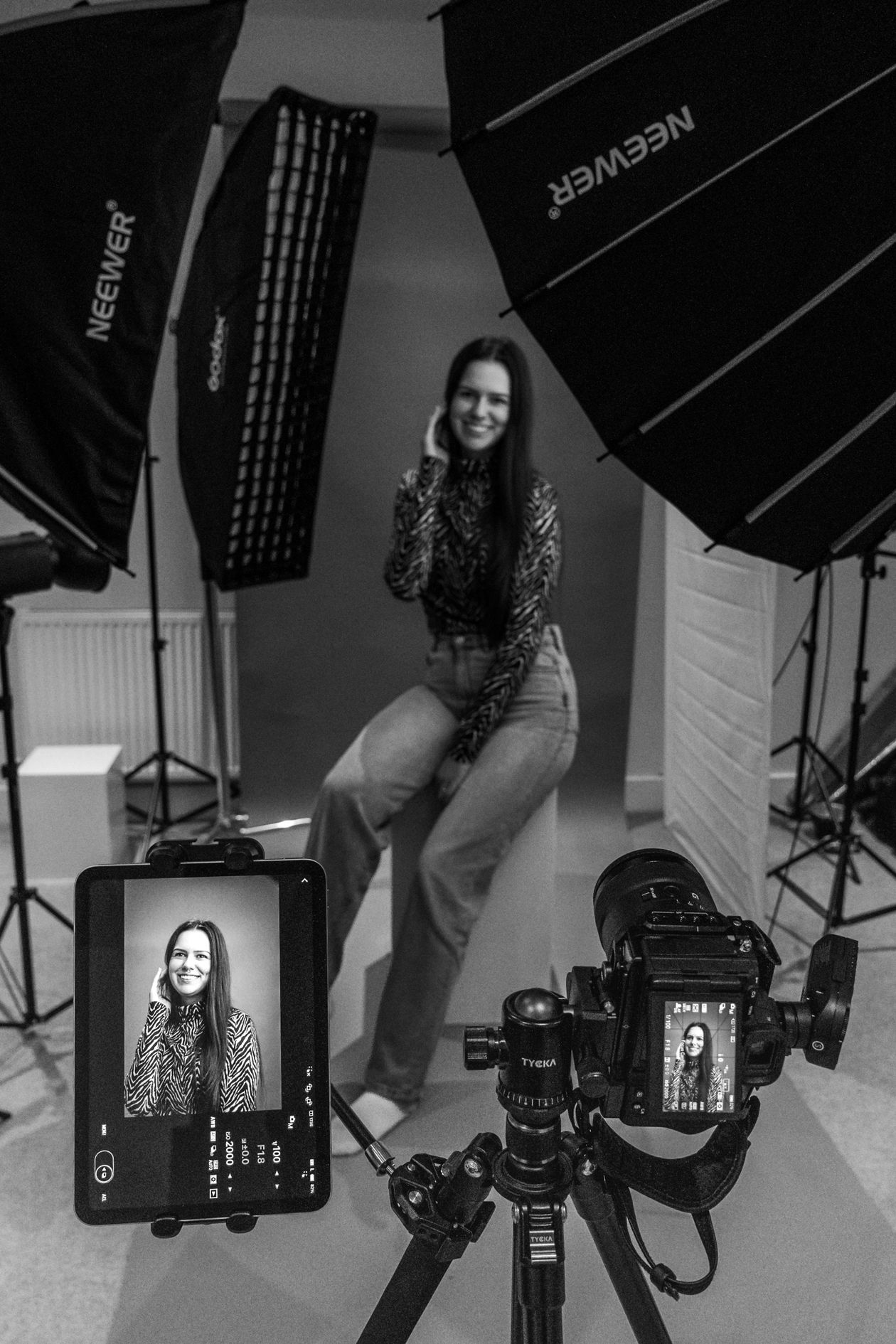
A studio session gives the most controlled light and background, and it suits leadership portraits and small teams. The cost is travel and scheduling friction for every employee. A mobile studio removes that friction: professional lighting and a backdrop set up in a conference room, staff photographed between meetings, and minimal disruption to the workday. For a full company, the mobile option usually wins on participation alone, because the headshot you never get from the person who could not leave the office is the one the website needs most.
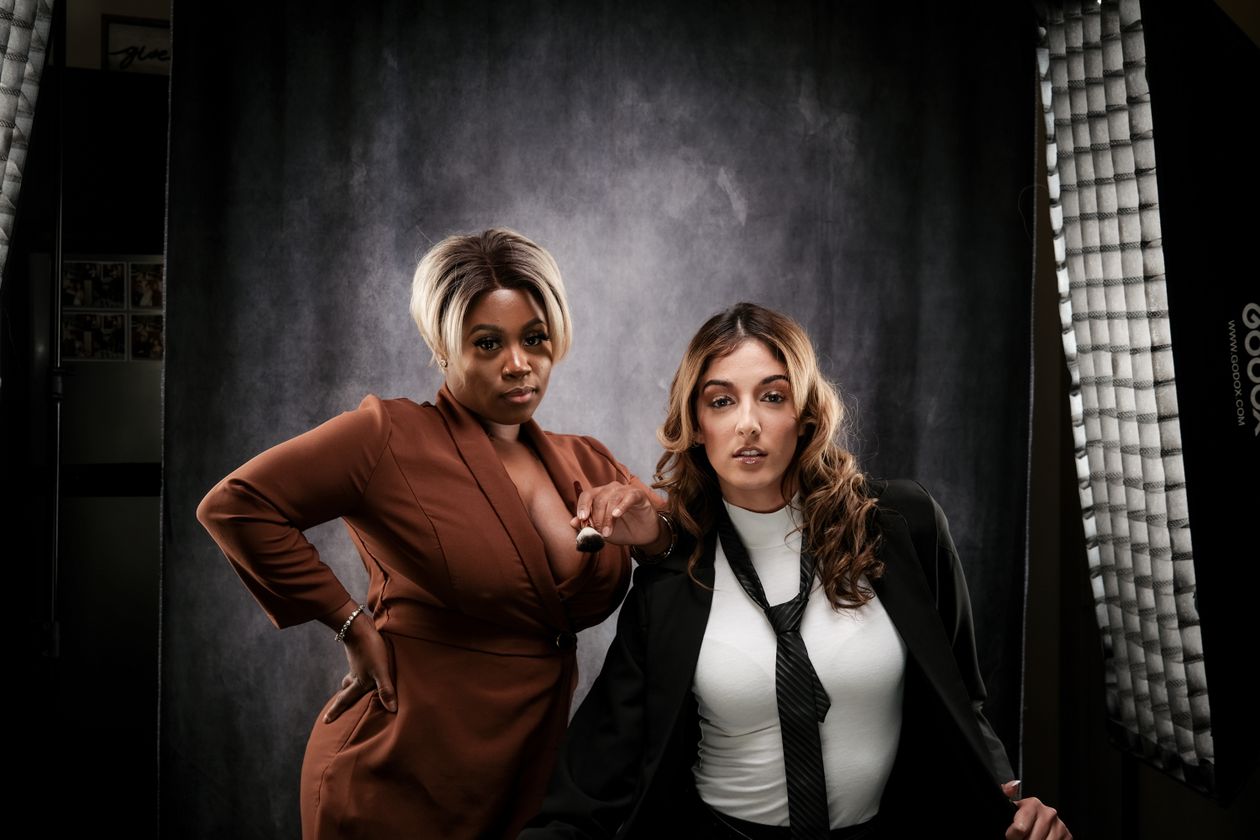
Hybrid plans are common in Charlotte: executives and new hires at the studio for a fuller session, the wider team photographed on location in one or two scheduled days, all matched to the same background and crop standard. Agree the standard first and either route can feed it.
Scheduling people, not just time
Build the schedule around humans. Put nervous staff early, while the photographer is fresh and the mood is light, and let them see a preview on the spot; word travels fast that it does not hurt. Keep leadership slots flexible, because executive calendars move. Leave deliberate gaps every hour; they absorb the inevitable overrun and give the photographer time to check quality instead of racing. For remote or field staff, schedule a catch-up studio slot within the same month so the set stays complete.
After the day, delivery discipline matters as much as shooting discipline. Ask for files named by employee, in the sizes your website and LinkedIn actually use, with retouching matched across the set. Store the masters in one shared place and tell the team where they live. Companies repeat team headshots every two to three years, or after major rebrands and leadership changes, and the company that kept its files organized starts that project a week ahead of the one that did not.
Budget the project honestly, in time if not in detail. The true cost of team headshots is mostly staff minutes: five to ten minutes in front of the camera, plus the walk, plus the wait when the schedule slips. On-location shooting cuts the travel portion to nearly nothing, which is why operations managers tend to favor it after the first year. Whatever you choose, announce the date early, repeat the wardrobe guidance twice, and treat the point person's time as real work. Good headshot days feel boring while they happen, and boring is the goal.
Common questions
How long does each person take on team day?
Five to ten minutes per person is typical for a matched set of headshots, including a quick review of the frames together.
What if someone is out on the scheduled day?
Book a short catch-up session at the studio within a few weeks, shot to the same background and crop, so their photo matches the set.
How do we keep photos consistent as new hires join?
Keep the original brief: background, crop, and dress standard. Send new hires to the same photographer with that brief, and their photo will slot into the page cleanly.
Photos in this guide are representative stock images.
← All guides from Bazemore Studios← Back to Bazemore Studios